 Skip to content
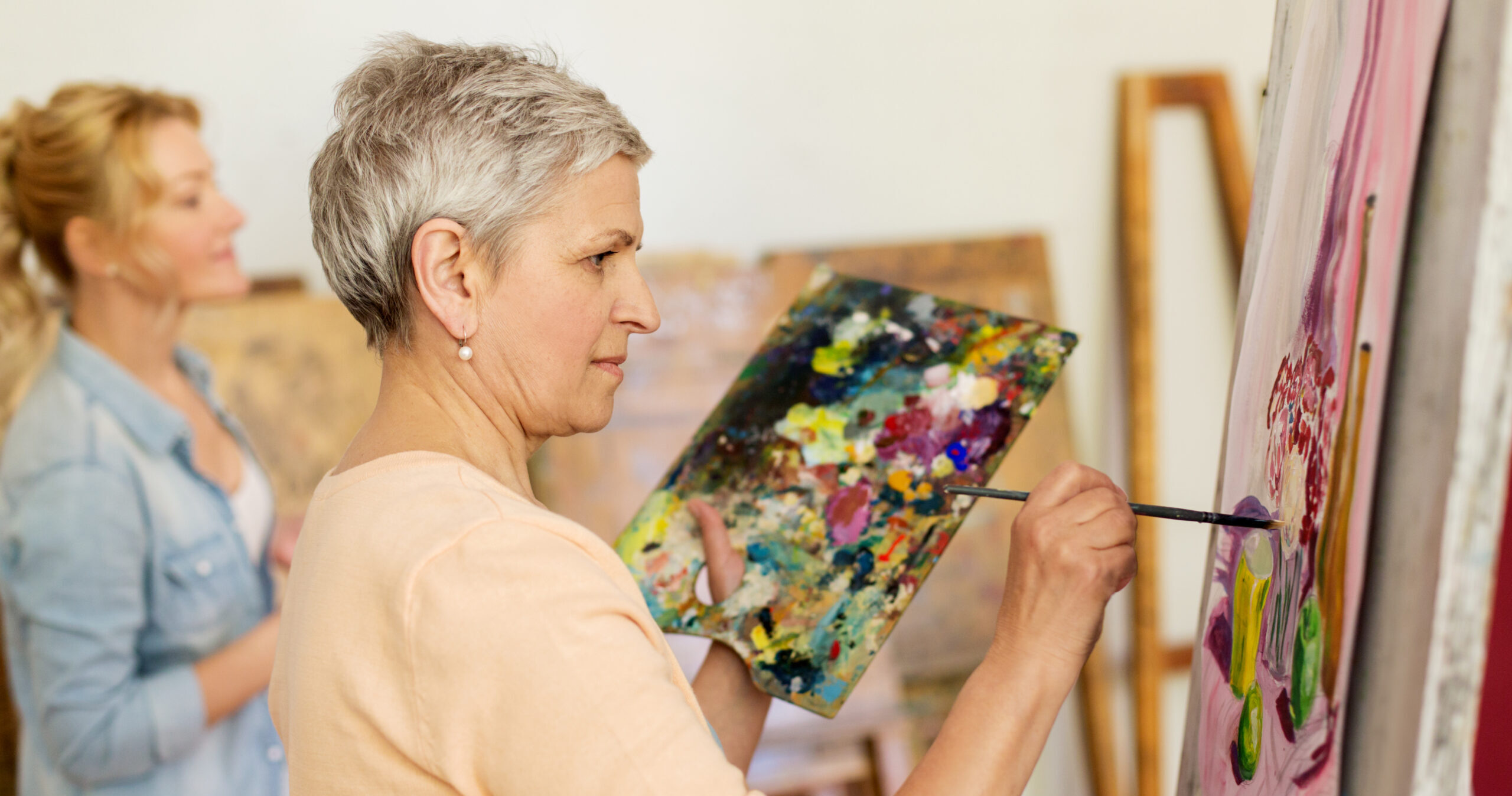
Artist Thomas Merton said, “Art enables us to find ourselves and lose ourselves at the same time.”
That truth comes alive when you are caring for a loved one with dementia. Long after memories fade and language falters, a paintbrush dipped in watercolor can form flickers of recognition in those with memory concerns.
Capri Communities sees creativity as more than an activity. Artistic expression helps those living with dementia feel less anxious, become more engaged, and maintain relationships as their memory declines.
When Words Fade, Creativity Still Speaks
When creativity takes center stage, dementia is no longer the focus.
Research shows making art is a powerful nonverbal outlet for emotion and connection. Even when your family member struggles to find words, their brain can still respond to color, texture, music and movement.
An art session can spark concentration, recall and participation. For example, painting a watercolor landscape may awaken memories of a favorite vacation. Sketching flowers may remind them of their garden. It can also help them express feelings as conversation gets harder.
Art exploration also creates opportunities for socialization. Around a table filled with paint, clay or collage materials, caregivers and their loved ones can stop concentrating on the disease and simply share life together.
What Is Process Art?
Process art emphasizes creativity, exploration and self-expression. There is no pressure to produce something “perfect.” The fun comes in experimenting with colors, textures and materials in a meaningful way.
Because the experience matters more than the outcome, there is no right or wrong way to make art. That freedom makes process art especially valuable for those with Alzheimer’s or dementia.
Set the Stage
Set the stage before you start by creating a calm, well-lit and clutter-free space. This will help your loved one stay focused and engaged. Keeping supplies within easy reach also reduces frustration and supports independence.
Be patient and celebrate their small victories. Offer encouragement. Allow your family member to move at his/her own pace. The goal is expression not perfection.
Remember to tailor activities to individual abilities. Larger brushes, thicker crayons or simpler projects may feel more comfortable for those with limited memory and motor skills. Adjusting activities to their abilities keeps things fun instead of frustrating.
Get Creative
There are countless ways to weave self-expression into your loved one’s day. Here are a few simple ideas to get started.
Create a Collage
Gather magazines, family photos, colorful paper, scissors and glue, then let creativity soar. While cutting and arranging pictures, individuals with dementia might recall the past.
Paint to Music
Turn on a favorite song and urge them to let their brush dance across the page. Painting while listening to familiar music can ease anxiety, improve concentration and unlock memories. Ask your family member to choose colors based on how the music makes them feel.
Shape and Sculpt with Clay
Soft clay provides a calming sensory experience. Invite them to roll simple shapes, make textured patterns or press shells and leaves into the clay. Because clay is easy to reshape, there is no pressure to “get it right.”
Explore Watercolors
Watercolors blend, spread and transform in beautiful ways that support curiosity and mindfulness. Watching colors flow across the page can captivate their attention and cultivate a sense of discovery.
Create Together
Group projects encourage laughter, conversation and teamwork. A group project doesn’t have to be labor intensive. These projects can be as simple as covering the kitchen table with paper and drawing together or as involved as painting a mural.
Coloring Books
Choose coloring books designed for dementia patients with large, easy-to-follow patterns. The repetitive motion of coloring can calm anxiety while leaving room for creativity.
Takeaways
Process art reminds families and caregivers that as memories fade, the person beneath them is still there. Art opens spaces for frustration to give way to focus, isolation to soften into connection and emotions move to the surface.
As writer and artist Elbert Hubbard once said, “Art is not a thing; it is a way.”
In dementia care, art is a way to communicate, connect and preserve dignity amid loss. And in the gentle act of creating, your loved one may experience something extraordinary. They may find pieces of themselves again, if only for a moment.